UPSIDED · Erasmus+ project
Happening now Crunch Time by HELHa · 23–27 November 2026 · Lotto Mons Expo, Belgium See events
Co-funded by the European Union Erasmus+ Enrichit les vies, ouvre les esprits
Project 2025-1-FR01-KA220-HED-000356377
Project sheetRef. 2025-1-FR01-KA220-HED-000356377
UPSIDED project logo UPSIDED
Programme
Erasmus+ · Cooperation partnerships in higher education (KA220-HED)
Duration
36 months · 01/09/2025 – 31/08/2028
EU grant
€400,000 lump sum
Consortium
4 universities · France, Belgium, Netherlands, Sweden
Coordinator
UTBM, Université de Technologie de Belfort-Montbéliard
Month {{ month }} / 36
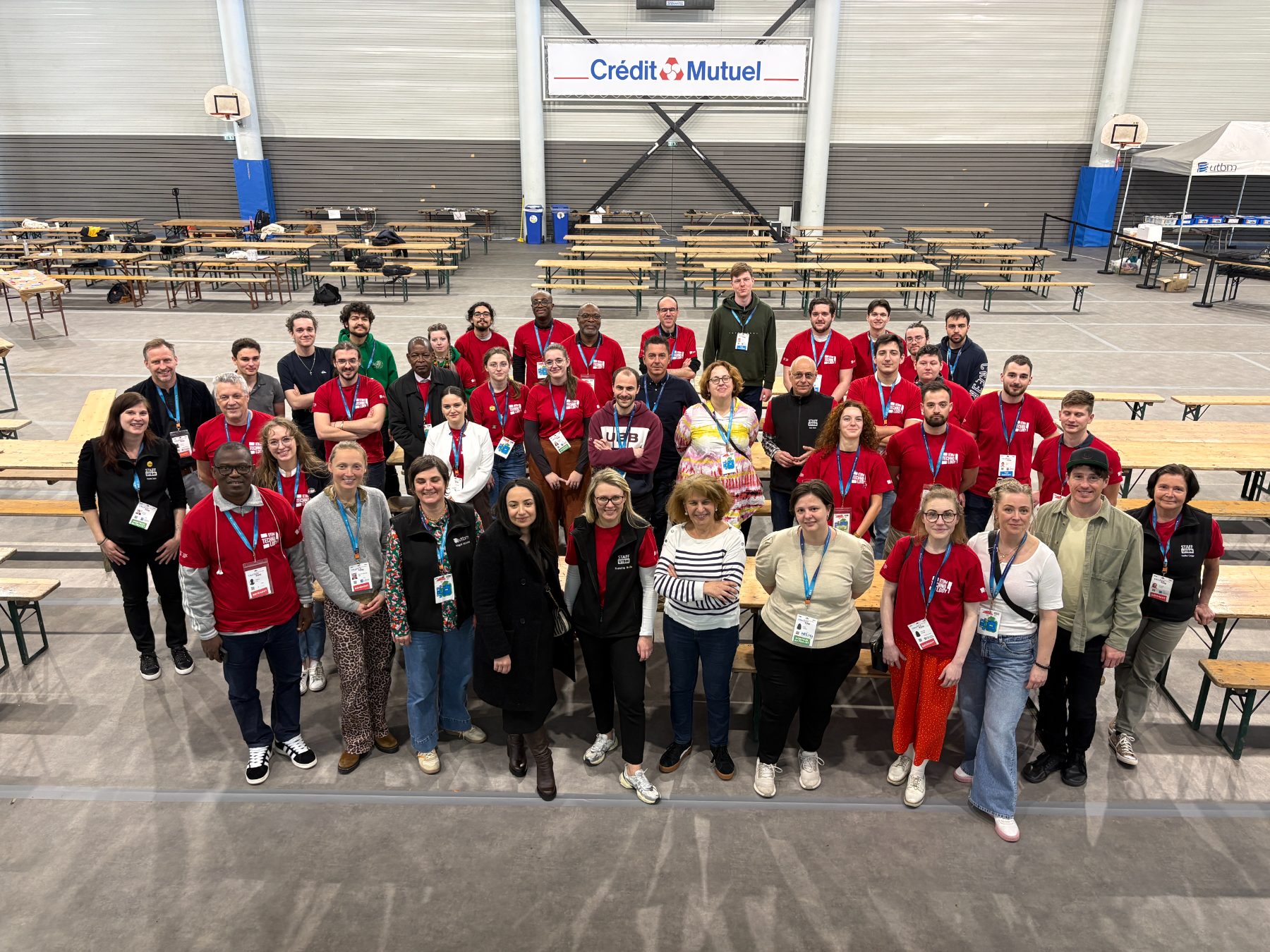
UPSIDED partner representatives in front of the project banner, UTBM Innovation Crunch Time 2026, Montbéliard
Erasmus+ cooperation partnership · 2025–2028

Unique Pedagogies Stimulating Innovation, Disruption & Entrepreneurial Development

Photo: UPSIDED team, coaches and students · UTBM Innovation Crunch Time, Axone Montbéliard, March 2026
Your university runs hackathons or design sprints? Tell us
A consortium of
four universities

A European cooperation project led by four universities to develop a framework and a toolbox that help higher education institutions design and run innovation challenges such as hackathons, in person or online, building on the Crunch Time model born at UTBM in 2017.

01 · Consortium

Four universities, four countries

{{ p.photoAlt }}
{{ p.photoCredit }}
{{ p.name }} logo {{ p.code }}
{{ p.country }} {{ p.role }}
{{ p.name }}
{{ p.place }}
{{ p.students }}
students
{{ p.staff }}
staff

{{ p.short }}

Website
02 · About UPSIDED

Innovation is learned through practice, not in the lecture hall

Technology drives societal change, shaped by science, societal needs, economics, and culture. Universities play a key role in training the professionals of tomorrow to address these challenges, but innovation, creativity and the development of soft-skills cannot be easily taught in classrooms—they need practical, hands-on experiences.

Both the Crunch Time initiative and the diverse pedagogical challenges addressed by the consortium partners have highlighted how project-based learning cultivates creativity and problem-solving abilities. Students from various disciplines collaborate to solve real-world issues alongside a wide range of partners, including not only industry players but also associations, public organizations, and other entities.

By creating and sharing a comprehensive toolbox containing essential elements (teaching guidelines, frameworks, tools, etc.) for implementing pedagogical challenges focused on teaching innovation, this project will empower higher education actors worldwide to adopt this approach and join a global community.

Target groups

Students

Need an education that moves beyond passive learning to hands-on, real-world experiences.

Universities

Need reliable pedagogical tools and digital platforms to support modern teaching methods and align academic curricula with real-world skills and industry needs.

External organisations

Stronger collaboration with academia to ensure graduates develop skills aligned with workforce demands, with post-event services to maintain collaboration and long-term engagement.

Topics addressed

Support for European and regional innovation and smart specialisation strategies
New learning and teaching methods and approaches
International relations and development cooperation

Values

Humanitarian values. Innovation must be guided by ethics, sustainability, and social responsibility.
Holistic approach. Education should integrate technology, real-world learning, and human values to prepare for future challenges.
03 · The Crunch Time format

Five days to solve a real challenge

A Crunch Time is an innovation challenge created by UTBM. For one week, students leave their usual classes and work in multidisciplinary teams on concrete problems submitted by companies, public bodies and associations.

Supported by coaches, each team has five days to understand its problem, explore ideas, design a solution and present it to the organisation that proposed the challenge. UPSIDED studies this format and tests it in other universities, starting with HELHa in Mons.
Real challenges
Submitted by companies and organisations from the field, with a contact person who follows the team.
Mixed teams
Students from different programmes and years work together, so each team combines several skill sets.
Coaching
Teachers and professionals guide the teams through each stage of the week.
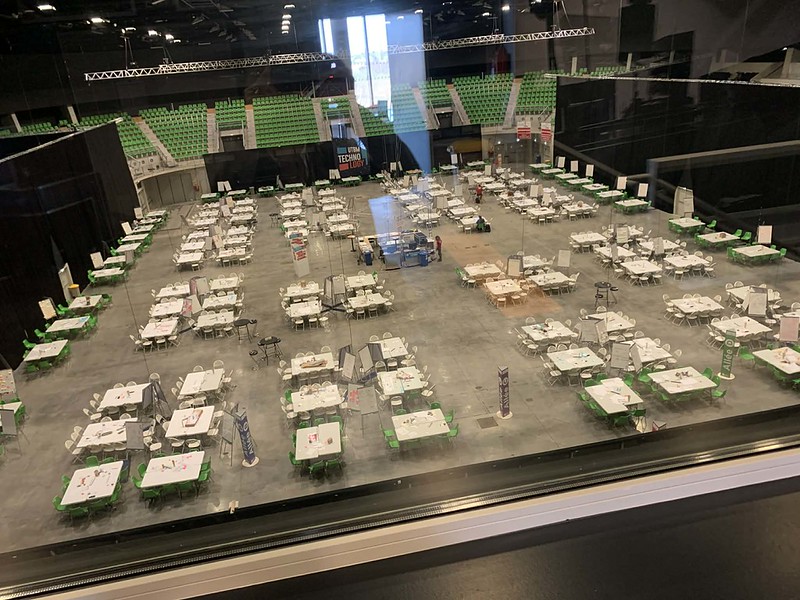
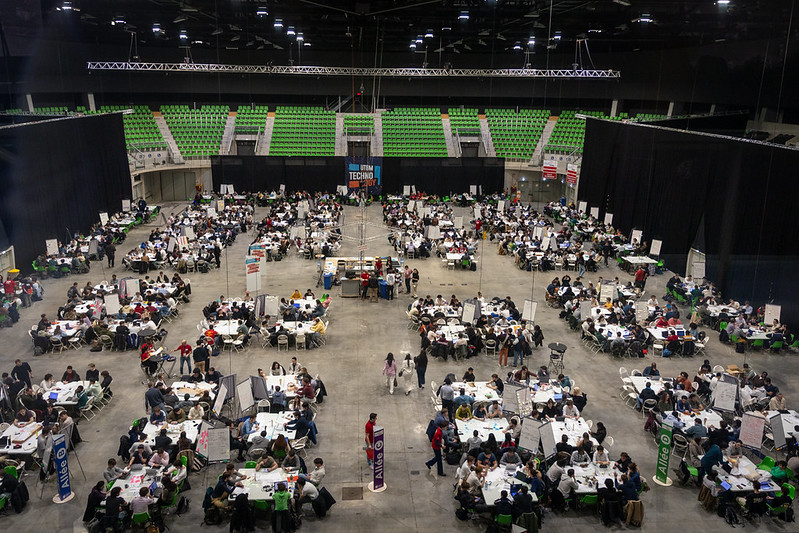
The empty Crunch Time hall before the students arriveThe same hall filled with student teams during the Crunch Time
The hall before and during the event · UTBM Innovation Crunch Time, Axone Montbéliard

How the week runs

01
Understand

Teams discover their challenge, meet the organisation behind it and clarify the problem to solve.

02
Explore

Research, field questions and idea generation open up possible directions.

03
Design

The team selects one idea and develops it into a concrete, tested solution.

04
Present

On the last day, each team pitches its solution to the challenge owners and the jury.
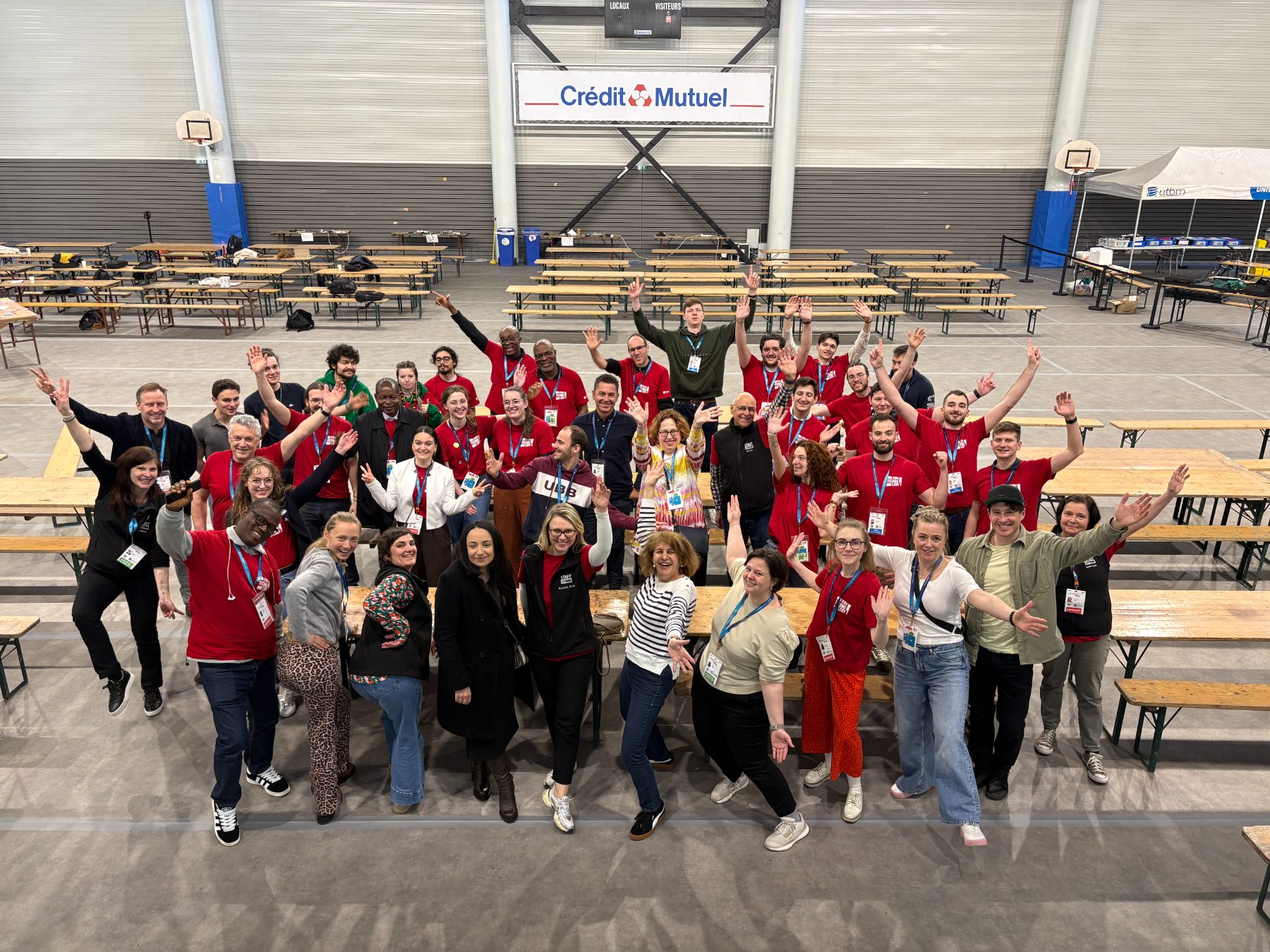
Coaches, staff and partners of the UPSIDED project at a Crunch Time
Coaches, staff and UPSIDED partners · UTBM Innovation Crunch Time, Axone Montbéliard, March 2026

In pictures · UTBM Crunch Time 2026

{{ crunchPos }}
{{ ph.alt }}
Photos UTBM · Flickr

Watch, read, visit

04 · Objectives

What the project sets out to achieve

01

Innovative teaching

Promote and stimulate innovative teaching through innovation challenges, support higher education across Europe, and offer students a unique interdisciplinary experience.

02

Build networks

Build networks with universities, companies, and organizations to connect students with industry, mentorship, and real-world challenges.

03

A sustainable ecosystem

Develop a collaborative environment focused on innovation, sustainability, and ethical responsibility, preparing students for future challenges.

Erasmus+ priorities Stimulating innovative learning and teaching practices Promoting inter-connected higher education systems Supporting innovation and entrepreneurial skills of students
05 · Work plan

Four work packages over three years

WP1 · UTBM
Project management

Coordination, quality, communication and reporting across the consortium for the full 36 months.

WP2 · €42,349
Study & specification

Analyse innovative pedagogical challenges to identify key success factors and develop a scalable, adaptable model that fosters creativity, problem-solving, and interdisciplinary collaboration.

WP3 · €242,076 · led by HELHa
Experiments

Organise several pedagogical challenges, in person and in a hybrid version, to test the framework in various educational settings.

WP4 · €47,872
Toolkit & evaluation

A transferable toolkit to help universities design and run innovation challenges in person or virtually, and a community linking students, academia and external organisations.

06 · Events

Challenges, meetings and field work

Group photo of the UPSIDED delegation and coaches
07 · Results

Published results and work in progress

Published · May 2026WP2 · Activity 1
Study of existing systems at partner institutions

A questionnaire-based analysis of the innovation challenges run by the four partners (Business Project Week, IAthon, Dalarna 24h, Crunch Time…), with best practices, evaluation methods, a first needs analysis from field interviews, and the project’s progress report on Crunch Time 2026.

Download the report (PDF, 18 p.)
In progressWP2 · Activity 2
State of the art of innovation challenges in Europe

The study now turns outwards, towards other universities and initiatives involving innovative teaching practices in Europe and beyond, to build a database, compare formats and define evaluation criteria.

Your university runs hackathons or design sprints? Tell us
Toward the toolbox · Internship

A serious game, born during a self-crunch

During Crunch Time 2026, the UPSIDED team applied the Crunch Time methodology to itself, just like the students. The challenge: design the content of a toolbox, and decide which resources a university needs to organise an innovation challenge.

The idea that emerged was a serious game as one of the tools of the future toolbox. Since September 2026, a UTBM student (France) has been working on it during an internship at HELHa (Belgium).

Why universities need a toolbox
ANo clear methodology
BLack of operational resources
CDifficulty mobilising external partners
DGood practices are rarely capitalised

Difficulties identified in the self-crunch brief “Sujet A”.

08 · News

Latest from the project

Follow UPSIDED on LinkedIn
Mar 2027
New experimentation through UTBM Crunch Time
22–26 March 2027 at the Axone, Montbéliard: 1,500 students and 150 challenges.
Jan 2027
Windesheim is about to run an innovative pedagogical challenge
The next experimentation of the UPSIDED framework, in the Netherlands.
Nov 2026
HELHa runs its first Crunch Time
400 students from 15 programmes tackle around thirty challenges on sustainable development and societal impacts.
Sep 2026
Serious game internship starts at HELHa
A UTBM student joins HELHa to develop the serious game imagined during the self-crunch.
May 2026
First result published
The study of the innovation challenges organised by the UPSIDED universities. Read it
09 · Get involved

Want to contribute?Add your idea to the project.

UPSIDED is building a community of universities, companies, associations and students who believe innovation is learned by doing. Share a challenge format you run, propose a challenge for students, offer to coach, or simply ask to be kept informed.

→Universities: share your hackathons, design sprints and challenges
→Organisations: submit a real-world problem for student teams
→Students and staff: join as coach, expert or participant

Thank you, {{ sentName }}

Your idea has been added to the UPSIDED inbox. A member of the consortium will get back to you.

UPSIDED
Unique Pedagogies Stimulating Innovation, Disruption, and Entrepreneurial Development
Co-funded by the European Union Erasmus+ Enrichit les vies, ouvre les esprits

Funded by the European Union. Views and opinions expressed are however those of the author(s) only and do not necessarily reflect those of the European Union or the French Erasmus+ National Agency. Neither the European Union nor the granting authority can be held responsible for them. Project 2025-1-FR01-KA220-HED-000356377.

{{ partner.name }} logo
{{ partner.role }} · {{ partner.place }}
{{ partner.name }}
Your text here

{{ para.a }}{{ para.l }}{{ para.b }}

  • {{ it }}